Cosmic Ear (SE)
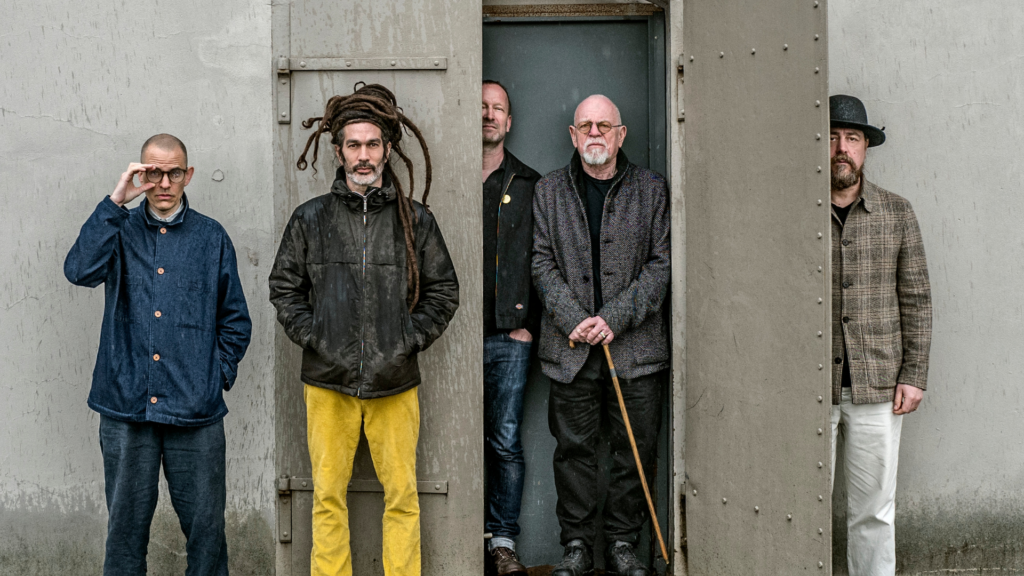
”Orostider väcker längtan efter kosmiskt groove.” – Dan Backman, Svenska Dagbladet 2025
Don Cherry, a thirty-year-old jazz trumpeter who had travelled the world, settled in Sweden in the early 1960s. First living in Stockholm, he then bought an old folk school in the middle of the forest in Skåne with his wife, visual artist Moki Cherry. The family’s large rural home gradually became a local cultural centre and meeting place for artists.
Cherry’s first years in Sweden also marked a new musical phase or, rather, a major turning point. He became increasingly interested in different folk music styles and ‘ethnic’ instruments from different countries, while also developing his own world music blend – long before the concept of world music.
One of the first albums of this pioneering work was Organic Music Society (1973), which was recorded in Sweden with primarily Swedish musicians. On this record, clarinetist Christer Bothén (b. 1941) plays the West African donso n’goni, also known as the hunter’s harp. Cherry later adopted it as his own side instrument, but Bothén, who had lived and studied in Mali, introduced it and also taught it.
Bothén later performed and recorded with Cherry on several occasions and is now both entitled and able to follow in his footsteps in the Swedish ‘supergroup’, Cosmic Ear. But this is not just about imagination and a single personal connection, as emphasised in the ensemble’s first album Traces, which was released in May 2025.
The album also includes one composition recorded by Bothén and Cherry together in 1973 and two new songs by the ensemble – Traces Of Brown Rice and Traces Of Codona And Mali – which refer directly to Cherry. Recorded in New York, Brown Rice (1975) is perhaps Cherry’s most famous fusion album, and Codona was an acoustic ‘ethno-trio’ specialising in world music. Between 1978 and 1982, the trio recorded three records for ECM, all of which featured Cherry playing the donso n’goni.
Despite all this, Cosmic Ear does not try to draw too much from the past or recreate what has already been played. This is above all a process, the traces that are passed down from musician to musician, from generation to generation.
Line-up
Goran Kajfeš – trumpet, pocket trumpet, synth, electronics, percussion
Mats Gustafsson – tenor sax, flute, slide flute, Ab clarinet, live-electronics, organ, harmonica
Christer Bothén – bass clarinet, contra bass clarinet, donso ngoni, piano
Kansan Zetterberg – bass, donso ngoni
Juan Romero – congas, berimbau and percussion
Listen
At the same concert
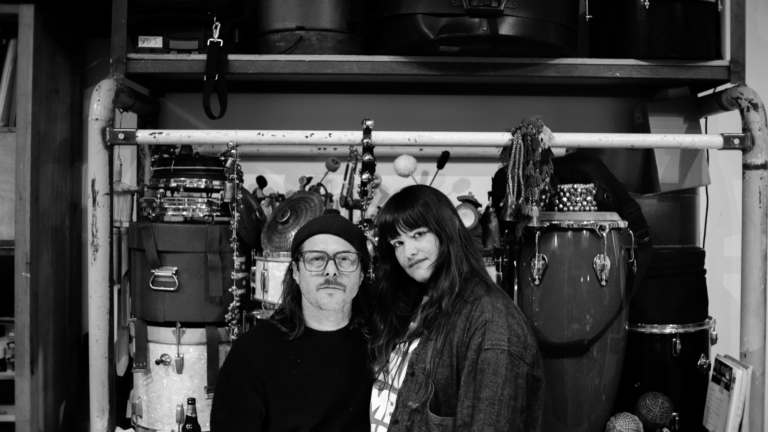
MESTIZX (NL/US/BO)
”Their album (. . .) is so rich in sound, rhythm and atmosphere that the term jazz is actually not sufficient.” – Gijsbert Kamer, de Volkskrant 2024
30.10.2026
23.30
Pakkahuone
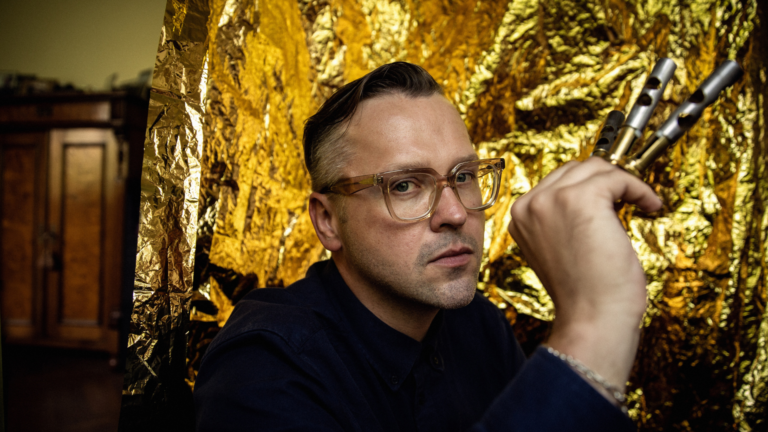
Tomasz Dąbrowski & The Individual Beings + Johanna Elina Sulkunen (PL/FI/DK/NO)
”Like his mentor Tomasz Stanko, the Polish trumpet visionary Tomasz Dąbrowski prefers to work without a safety net.” – Carlo Wolff, Downbeat 2022
30.10.2026
21.45
Pakkahuone
Kiri Ra! (FI/SE)
”I was particularly drawn to that emphasis on slowness, on allowing the music to simply ’exist’.” – Nikola Marković, Eurojazzist 2026
30.10.2026
19.30
Telakka